
We all have that moment of panic. You are walking down the street, swinging your arms naturally, and then you hear it—that sickening crunch or scrape sound.
That happened to me today. I absolutely love my Apple Watch Series 11. For everyday use, it has been durable enough to handle keys in my pocket or the occasional bump against a doorframe. But today, I lightly grazed a brick wall while walking past it.
I looked at my wrist expecting to simply wipe off some dust. Instead, I found permanent battle scars. While the scratches aren’t deep enough to ruin the display, they are definitely visible under the light. Honestly? I expected a bit more resilience from the latest tech.
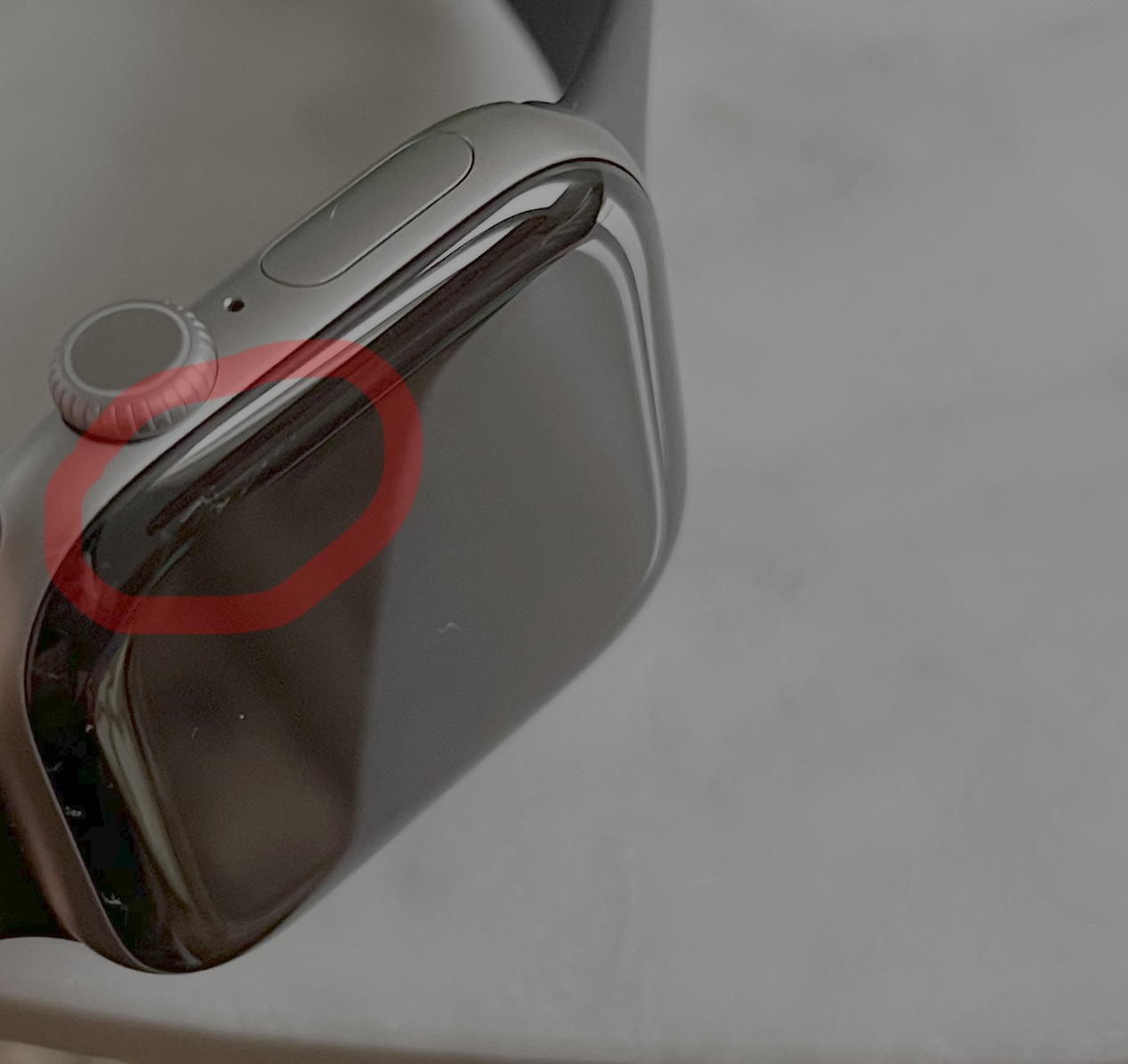
The Science: Why a Brick Wall Defeated the Watch
It feels counter-intuitive. How can a piece of advanced technology worth hundreds of dollars lose a fight against a stationary wall? The answer lies in materials science, specifically the Mohs scale of mineral hardness.
If you have the standard Aluminum Apple Watch Series 11 (like I do), your screen is made of Ion-X Glass.
- Ion-X Glass is designed to be lightweight and flexible. This makes it incredibly resistant to shattering if you drop it on the floor.
- However, flexibility comes at a cost: it is softer than rigid crystals.
Brick walls, concrete, and rough stone often contain materials like quartz and silica. On the hardness scale, quartz is significantly harder than glass. When you brushed against that wall, the wall acted like sandpaper. The glass didn’t stand a chance.
The “Premium” Difference: Sapphire Crystal
You might have heard friends with the Apple Watch Ultra, or the Titanium and Hermès editions of the Series 11, claim their watches are indestructible. In terms of scratches, they are mostly right.
cURL error 28: Operation timed out after 10001 milliseconds with 0 bytes received
Apple uses a completely different material for these higher-tier models: Sapphire Crystal.
Sapphire is one of the hardest minerals on earth (right behind diamond). If I had been wearing a Sapphire model, that brick wall likely wouldn’t have left a mark. The trade-off? Sapphire is more brittle. While it resists scratches beautifully, it is technically more prone to shattering upon high-impact drops compared to the more flexible Ion-X glass.


So, is the Series 11 Scratch-Proof?
The short answer is: No, it is crack-resistant.
Apple’s marketing often highlights durability, but it is important to distinguish between surviving a fall (impact) and surviving a scrape (abrasion). The standard Series 11 is built to survive the former, but struggles with the latter when stone or sand is involved.
How I’m Fixing It (And Tips for You)
Since I can’t un-scratch the screen, I looked for solutions. You cannot polish these scratches out (doing so would ruin the touch screen’s coating), but you can hide them.
- The “Self-Healing” Screen Protector: I applied a soft TPU (hydrogel) screen protector. The adhesive fills in the shallow scratches, rendering them almost invisible to the naked eye. It also prevents the “brick wall incident” from happening again.
- The Case Option: If you work in construction or are prone to bumping into things, a bumper case might be necessary, though it does hide the beautiful design of the Series 11.
The Verdict: If you are buying an Apple Watch Series 11 and you know you are clumsy near rough surfaces, budget for a screen protector immediately. Or, if scratches drive you crazy, it might be worth saving up for the Titanium or Ultra models next time to get that Sapphire glass.


Have you managed to scratch your Apple Watch yet, or are you luckier than I am? Let me know in the comments below!
Last Updated on 15 February 2026


 English
 Deutsch
 Nederlands
 Français
 Español
 Italiano
 Svenska